Old Crow Travel Guide: Yukon's Most Remote Community
Old Crow is the only Yukon community with no road connection to the outside world. Accessible only by air, it sits above the Arctic Circle on the Porcupine River — home to the Vuntut Gwitchin First Nation and one of the most extraordinary landscapes in Canada.
Old Crow is the Yukon's northernmost community, home to about 250 members of the Vuntut Gwitchin First Nation. It sits on the Porcupine River approximately 800 kilometres north of Whitehorse, well above the Arctic Circle at latitude 67.5°N. There are no roads. The only way in is by air. This is not a casual detour — it is a deliberate destination that rewards those who plan carefully, approach respectfully, and understand that what they are visiting is a living community, not an attraction.
## Getting There
Air North (Yukon's Airline) operates scheduled flights between Whitehorse and Old Crow, typically several times per week; frequency varies seasonally. Charter flights are also available from Dawson City. There are no roads to Old Crow and no plans to build any — the Vuntut Gwitchin have deliberately maintained the community's fly-in status to protect the surrounding land and the traditional way of life it supports. The absence of a road is not an oversight; it is a choice.
Book flights well in advance, particularly in summer when demand peaks. One-way flights from Whitehorse take approximately one hour. Round-trip cost is significant — budget accordingly.
The Old Crow airport is a gravel strip. Luggage weight allowances are enforced strictly; pack accordingly and plan to bring all food you'll need.
## The Land
The landscape around Old Crow is defined by two features: the Old Crow Flats and the Porcupine River.
The Old Crow Flats, stretching north and east of the community, is a vast lowland mosaic of thousands of shallow thermokarst lakes — lakes formed by the thawing and collapse of permafrost. This is one of the most important waterfowl breeding and staging areas in North America. During summer migration, the Flats support millions of ducks, geese, swans, and shorebirds — including species from wintering grounds as far as South America and the Pacific Islands. The density of wildlife is genuinely staggering by the standards of anywhere else in Canada.
The Old Crow Flats Special Management Area, designated under the Vuntut Gwitchin Final Agreement, is managed to protect this habitat while maintaining the Nation's traditional use rights. It is accessible by boat from Old Crow (the Porcupine River flows through the Flats) and offers extraordinary wildlife observation — but access is by arrangement with community members, not independently.
The Flats are also remarkable for their Pleistocene fossil deposits. Mammoth bones, horse teeth, bison skulls, and other Ice Age remains have been found here in significant quantities — the area was part of Beringia, the unglaciated landmass where large mammals persisted while glaciers covered most of North America.
## The Porcupine Caribou
The Porcupine caribou herd — approximately 200,000 animals — migrates annually between its calving grounds on the Arctic coastal plain of Alaska and its winter range in the boreal forests of Yukon and Alaska. The herd is named for the Porcupine River, which it crosses twice yearly. Old Crow sits in the middle of this migration route.
The autumn caribou hunt is the central subsistence and cultural event of the Vuntut Gwitchin year. The community has relied on the Porcupine caribou for thousands of years — not as a resource to be managed but as a relationship to be maintained. The Vuntut Gwitchin have led international advocacy to protect the caribou's calving grounds in the Arctic National Wildlife Refuge from oil development; their position is that the herd's survival is inseparable from their own.
## Visiting Old Crow
Old Crow is not set up for independent tourism. There is no visitor centre, no commercial tour operator, and no standard visitor infrastructure. What it offers is something rarer: the experience of a genuine Arctic Indigenous community that has maintained its relationship to the land through tremendous pressure, and the extraordinary landscape that relationship is built on.
Before visiting, contact the Vuntut Gwitchin First Nation Government to discuss your plans. They can advise on whether your visit timing coincides with community events, whether accommodation is available, what the protocols for visitors are, and how to engage respectfully. Without this contact, arriving in Old Crow puts both you and the community in a difficult position.
Some community members offer informal guiding — fishing on the Porcupine, boat trips into the Flats, walks in the surrounding landscape. These arrangements are made locally and personally, not through a booking platform.
## Where to Stay
There is no hotel or hostel in Old Crow. Accommodation is arranged through community members who offer guest rooms — the Vuntut Gwitchin First Nation Government can help connect you. This must be arranged before your arrival; do not fly in without confirmed accommodation.
## Where to Eat
There is no restaurant in Old Crow. The Northern Store sells groceries, though selection is limited and prices reflect the cost of flying everything in from Whitehorse. Bring as much food as your luggage allowance permits. Plan self-sufficient meals.
## Best Time to Visit
June and July offer the midnight sun (Old Crow experiences 24-hour daylight from late May through mid-July), access to the Flats by boat, and the community's most active summer period. Biting insects (mosquitoes and blackflies) are significant in June and early July — carry effective repellent and head protection.
August is when the light begins to return and the mosquitoes diminish. September brings fall colours to the boreal and tundra, significantly reduced insects, and the possibility of seeing the caribou migration moving through.
Winter visits are possible for those with serious cold-weather experience and equipment — temperatures regularly drop below -40°C. The aurora at this latitude on clear winter nights is extraordinary.
## Cultural and Practical Tips
Old Crow is a dry community — no alcohol is permitted. This is a community decision made by the Vuntut Gwitchin and must be respected absolutely.
Photography of community members requires explicit, individual consent — ask each person before photographing them, and accept any refusal without question.
The land around Old Crow is the Vuntut Gwitchin's traditional territory, managed under their Final Agreement. Treat every aspect of your visit as a guest: ask before going anywhere, follow guidance from community members, and leave nothing behind.
The Vuntut National Park, established adjacent to Old Crow, is the northernmost national park in Canada and the largest. Access is wilderness-only; it is managed in partnership with the Vuntut Gwitchin First Nation. Contact Parks Canada for information about park access from Old Crow.
---
## Cultural Significance and Community Engagement
The Vuntut Gwitchin people have a rich cultural heritage deeply rooted in the land and the natural cycle of the seasons. Visitors have the rare opportunity to engage with this cultural legacy by participating in storytelling sessions or traditional craft workshops, if arranged in advance. These activities provide insight into the Gwitchin way of life, which has been shaped by the environment and sustained through generations.
Understanding the cultural significance of Old Crow and its surroundings enhances the experience. The community's stories, songs, and dances often reflect the profound connection between the Gwitchin people and their environment. Engaging with local cultural practices requires sensitivity and respect; ensure participation is welcomed and arranged through proper channels.
## Exploring the Wilderness
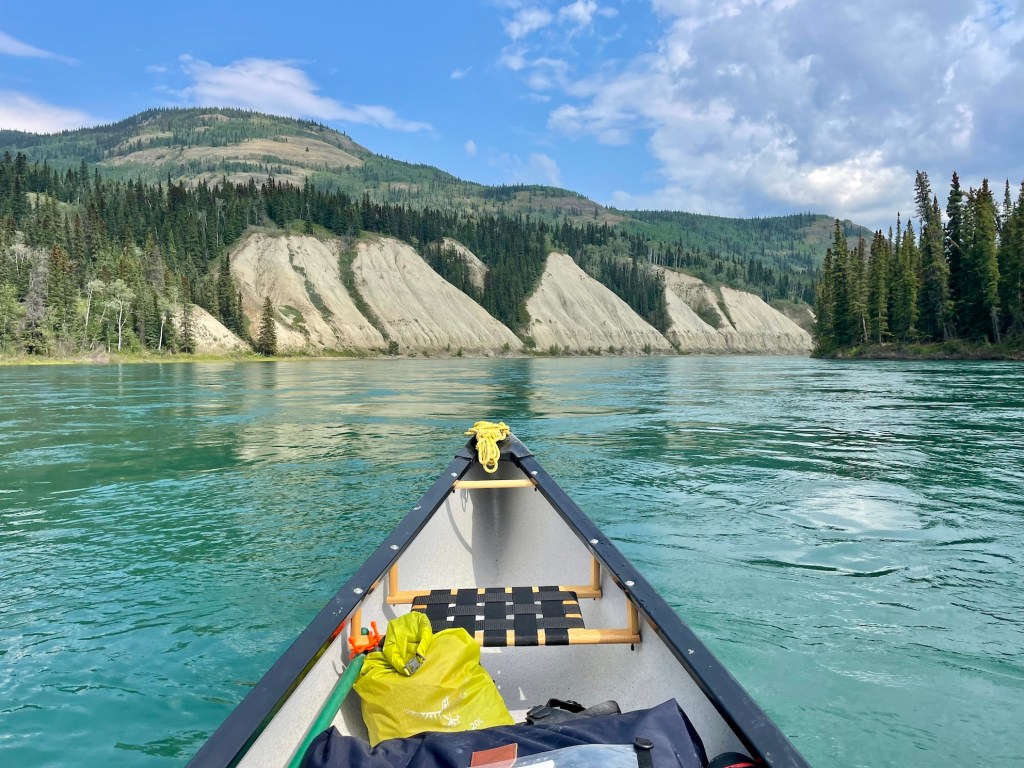
Beyond the community, the surrounding wilderness offers unparalleled opportunities for adventure and exploration. Canoeing down the Porcupine River is a quintessential Yukon experience, offering glimpses of elusive wildlife and the chance to navigate waters that have been traveled for centuries. For those seeking solitude and a deeper connection with nature, multi-day canoe trips can be arranged with local guides.
During winter, the landscape transforms into a snow-covered wonderland. Experienced skiers might consider cross-country skiing across the frozen Flats, where the silence is only broken by the occasional call of a raven or the distant howl of a wolf. The stark beauty of the winter landscape holds a different kind of allure, one that challenges the senses and rewards the prepared.
---
## See Also on TheKlondike.net
- [The Vuntut Gwitchin and the Porcupine Caribou: A Bond Spanning Millennia](/blog/vuntut-gwitchin-porcupine-caribou) — the full history and culture of the Vuntut Gwitchin people
- [The 1993 Umbrella Final Agreement](/blog/yukon-umbrella-final-agreement-1993) — how the Vuntut Gwitchin achieved self-government
- [Dawson City Travel Guide](/blog/dawson-city-48-hours) — Air North flights to Old Crow depart from Dawson and Whitehorse